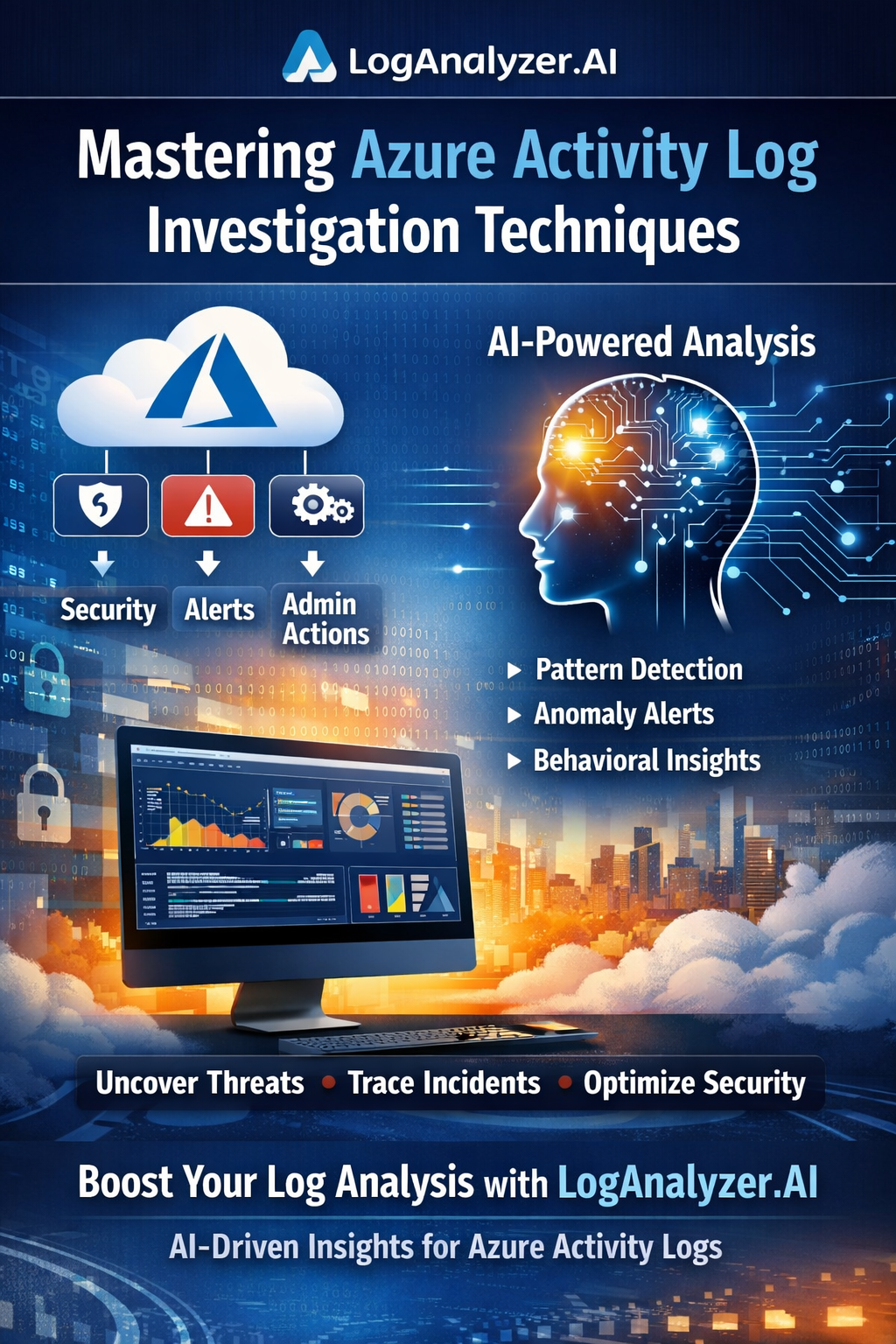
Mastering Log File Analysis with LogAnalyzer.AI
In today's digital landscape, where security breaches and cyber threats are pervasive, analyzing log files effectively is crucial for maintaining an organization's security posture. LogAnalyzer.AI stands out as a powerful tool that simplifies this complex process with AI-driven insights, enhancing the capabilities of security teams.
Understanding the Importance of Log File Analysis
Log file analysis is fundamental for identifying vulnerabilities, detecting unusual activities, and ensuring compliance with security standards. Analyzing logs helps security teams swiftly pinpoint potential threats and take corrective actions. This process is indispensable for:
Security Monitoring: Real-time analysis of logs aids in identifying anomalies and breaches. By continuously monitoring logs, organizations can detect unauthorized access attempts and potential data exfiltration activities in a timely manner.
Incident Response: Quick access to detailed log data facilitates efficient incident management. Logs provide a chronological record of events, allowing for the rapid reconstruction of security incidents to understand the scope and impact of breaches.
Compliance Audits: Comprehensive log analysis supports adherence to regulatory requirements. Industries subject to regulations like GDPR, HIPAA, or PCI DSS rely heavily on meticulous log examination to demonstrate compliance.
Practical Tips for Log File Analysis
Tip 1: Leverage automated alerts for critical log entries. Configure your system to trigger notifications for specific events, such as failed login attempts or unauthorized data access, ensuring security teams can respond immediately.
Tip 2: Develop a robust data retention policy. Determine how long logs need to be retained to meet compliance obligations and support forensic investigations, balancing this against storage costs.
Tip 3: Categorize your logs efficiently. By segmenting your log data into categories such as network, security, and application logs, you can streamline your analysis and enhance the ability to pinpoint specific issues faster.
Key Features of LogAnalyzer.AI
LogAnalyzer.AI offers a suite of features designed to streamline and improve log file analysis for security professionals:
Smart Scan: Upload your logs for instant, AI-powered analysis that interprets data in plain English, making it easier to understand complex patterns. This is particularly useful for less technical team members who require actionable insights without deciphering technical jargon.
Interactive Chat: This feature allows you to dive deeper into your logs by asking follow-up questions, enabling real-time clarification and insights. The chatbot can provide context around specific log entries, explain patterns, and even predict potential security implications.
Recurring Log Analysis: With the Schedule Scan feature, automate your log analysis processes on a daily or weekly basis, ensuring continuous monitoring. Scheduled scans help maintain consistency in monitoring and quickly detect any deviations from normal activity.
Management of Investigations: Organize your findings into comprehensive investigation workflows, promoting efficiency in threat investigations. This systematic approach simplifies collaboration across teams and helps ensure that critical insights don't get lost in communication.
These capabilities make LogAnalyzer.AI not just a tool, but an essential partner in strengthening your organization's security strategy. Learn more about these features on our Capabilities page.
Best Practices for Effective Log File Analysis
Implementing log file analysis requires strategic planning and diligence. Here’s a checklist to ensure thorough analysis:
Centralize Log Collection: Use a centralized system for collecting logs from different sources, ensuring they are updated in real-time. This approach minimizes the risk of missed alerts due to data silos.
Implement Baseline Configurations: Establish normal behavior baselines for your systems to easily spot anomalies. Regularly update these baselines to adapt to any changes in system usage patterns.
Regular Analysis Schedule: Set up a routine analysis schedule to catch threats early and establish an operational rhythm. Consistency in analysis helps in recognizing trends that could indicate developing threats.
Correlation and Integration: Correlate log data across different security tools for comprehensive insights. This integration enables a holistic view of your security posture, ensuring no threat goes undetected.
Access Control: Ensure only authorized personnel can access logs to maintain confidentiality and integrity. Implement strong authentication methods and audit log access for accountability.
Step-by-Step Guide to Log Correlation
Identify Relevant Logs: Determine which logs need correlation, such as firewall, antivirus, and application logs, to uncover security insights.
Select Correlation Rules: Develop correlation rules that highlight specific patterns indicating potential security threats.
Utilize Automation Tools: Employ automated tools like SIEM systems that can efficiently correlate logs across multiple sources and highlight significant events.
Evaluate Outcomes: Regularly review the outcomes of your correlation efforts to identify any deficiencies and make necessary adjustments for improved accuracy.
Common Challenges in Log File Analysis
Log file analysis can present several challenges, such as handling large volumes of data, differentiating between benign and malicious activities, and integrating across diverse log formats. LogAnalyzer.AI addresses these with:
Scalability: Designed to manage large datasets without compromising performance, LogAnalyzer.AI can efficiently process and analyze substantial log volumes, crucial for enterprises with extensive IT infrastructures.
AI-Driven Insights: Distinguishes between normal and suspicious activities, reducing false positives. This capacity for intelligent threat detection allows security teams to focus on genuine threats without the distraction of erroneous alerts.
Versatile Format Support: Compatible with multiple formats like Windows Event Logs, Syslog, AWS CloudTrail, and more. This versatility ensures seamless integration into diverse IT environments, preventing data bottlenecks.
Overcoming Data Overload
Organizations often struggle with data overload during log analysis. To manage this, prioritize logs based on criticality and relevance to your security objectives. Use filters to refine log data and focus on high-impact events. Categorize data into high, medium, and low-risk categories to streamline focus and resources efficiently.
FAQ: Understanding LogAnalyzer.AI
Q: How does LogAnalyzer.AI enhance log file analysis?
A: LogAnalyzer.AI uses AI to process and translate complex log data into understandable insights, making it easier for security teams to detect and respond to threats. This transformation of technical data into actionable intelligence speeds up decision-making processes.
Q: What types of logs does LogAnalyzer.AI support?
A: It supports Windows Event Logs, Syslog, AWS CloudTrail, Azure Activity Logs, and more, offering broad applicability across platforms. This extensive support helps in covering a wide array of systems and applications typical in modern IT environments.
Q: Can LogAnalyzer.AI handle large volumes of log data?
A: Yes, LogAnalyzer.AI is optimized for scalability, managing large quantities of log data efficiently. Its architecture is designed to scale effortlessly, accommodating growth in data volume without impacting performance.
Try LogAnalyzer.AI Today
Enhancing your security operation has never been easier. Visit LogAnalyzer.AI to explore how our AI-driven solutions can transform your log file analysis and help safeguard against potential threats. Start today with a free trial and see the difference AI can make in your security efforts.
Discover more about its functionalities and pricing by visiting the How It Works and Pricing pages to find the plan that best suits your organization's needs.
Final Thoughts
Regularly reviewing your log analysis strategy can significantly enhance your security posture. Leveraging tools like LogAnalyzer.AI fosters an environment where potential threats are swiftly identified and addressed, minimizing damage and protecting valuable data assets. Continuous improvement and adaptation of your log analysis processes, complemented by cutting-edge tools, are crucial steps toward achieving a resilient defense against cyber threats.